Concrete driveway building in Hayward CA - a slab built for what you park on it
Old driveway cracked, sunk or holding water? We rebuild it on a packed base with steel matched to what you park.
- Fully licensed and insured.
- Free quotes on site.
- Replies within 1 business day.
What does it take to build a new concrete driveway?
Concrete driveway building in Hayward means putting in a new driveway from the ground up. That's digging out and packing what the slab sits on, setting steel, then pouring and finishing concrete that carries your cars every day. The pour itself goes quickly, but plan on a stretch afterward where the slab cures before you can drive on it.
Most people who call Precision Hayward Concrete about a driveway have an old one that's cracked, sunk or holding water, or a house that never had a proper one. We're based in Hayward and work in the cities around it across the East Bay and over on the Peninsula. The price mostly comes down to a few things: how big the driveway is, how thick it has to be and what steel goes in for the vehicles you park, whether there's an old slab to tear out and haul away, how much digging the base needs, and the finish you pick. The schedule turns on the tear-out, any permit for work at the street, the weather on pour day and the days the concrete needs to cure before you drive on it. The estimate I write up after seeing your driveway puts your own figure on all of that.
How do you know your driveway needs replacing?
Cracks that keep growing
A crack or two in an old driveway is normal, but cracks that widen, multiply or leave one side higher than the other usually mean the ground underneath has moved. Once water gets into them, every wet season makes them worse, and a slab that's broken into pieces usually has to come out instead of being patched.
Sunken or tipped sections
If a panel has dropped near the garage or the street, the dirt under it usually wasn't packed when it was poured, and it's been settling ever since. Those edges catch tires and toes, and the low side tends to keep sinking as water collects there.
Water pooling by the garage
Standing water after rain, or a wet line along the garage door, means the slab was poured flat or tipped the wrong way. That water works its way under the slab and toward your house, so the slope is worth getting right when the driveway gets redone.
How we build a concrete driveway
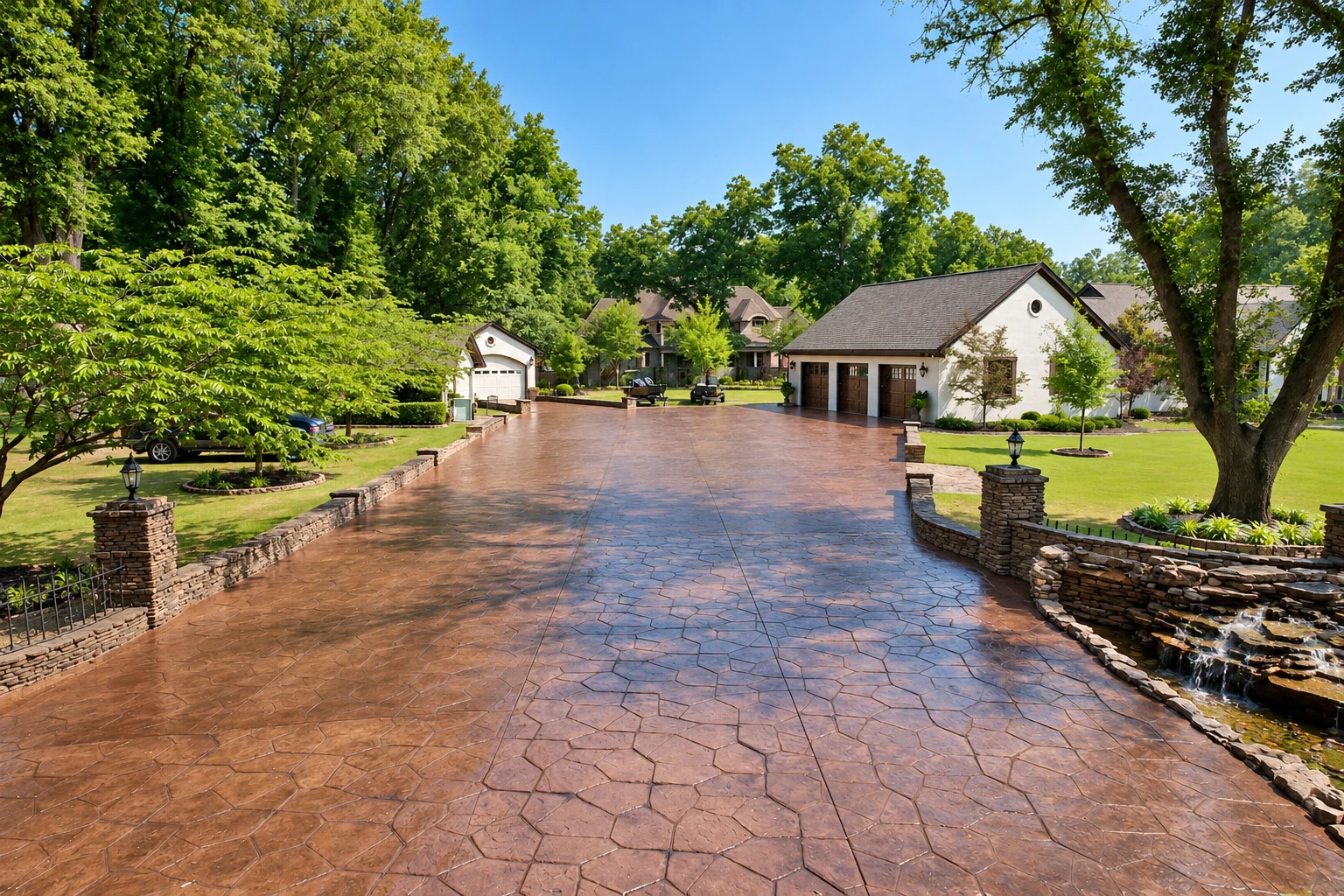
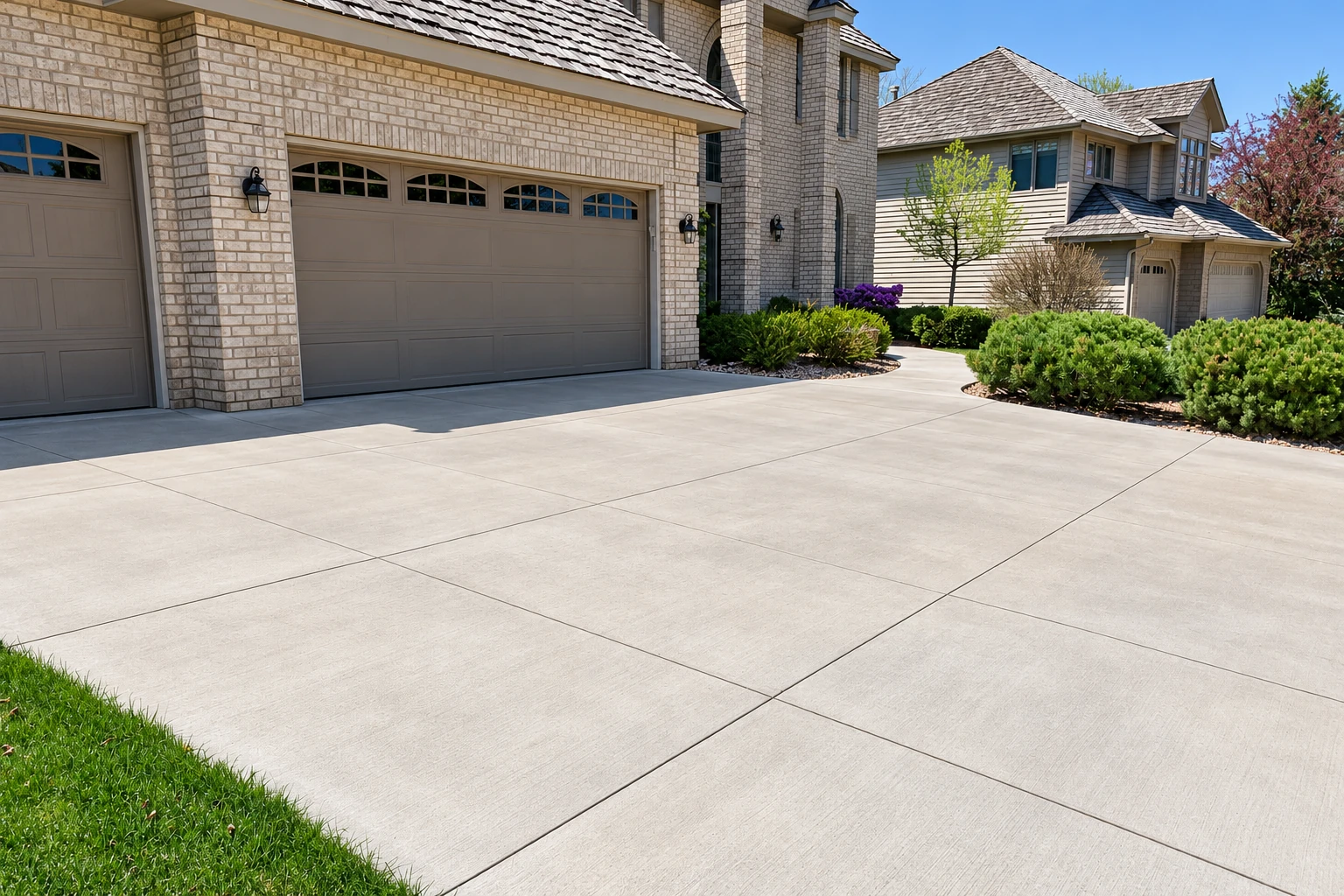
I start by asking what you'll park on it, a couple of sedans, a work truck or a camper, because that decides how we build the slab and what steel goes inside. Then we lay it out with you, where it meets the garage, where it meets the street and how wide it runs, before anything gets poured. Our crew digs down to firm ground and packs the subgrade, the layer the slab rests on, so the new driveway isn't sitting on loose dirt that was only raked level. We set the forms so the slab falls away from the house and water runs off, lay in the steel, and pour early in the day, since concrete that bakes in midday heat can end up with a weak, dusty top. We give it a broom finish, a light brushed texture that gives tires and shoes grip when it's wet, and cut control joints, shallow grooves that give the slab a straight place to crack instead of a spot it picks for itself, while the concrete is still fresh. If the budget's tight, I'd rather we spend it on the base than on a fancy surface, because a surface can be redone someday but nobody gets back under a slab that's already sinking.
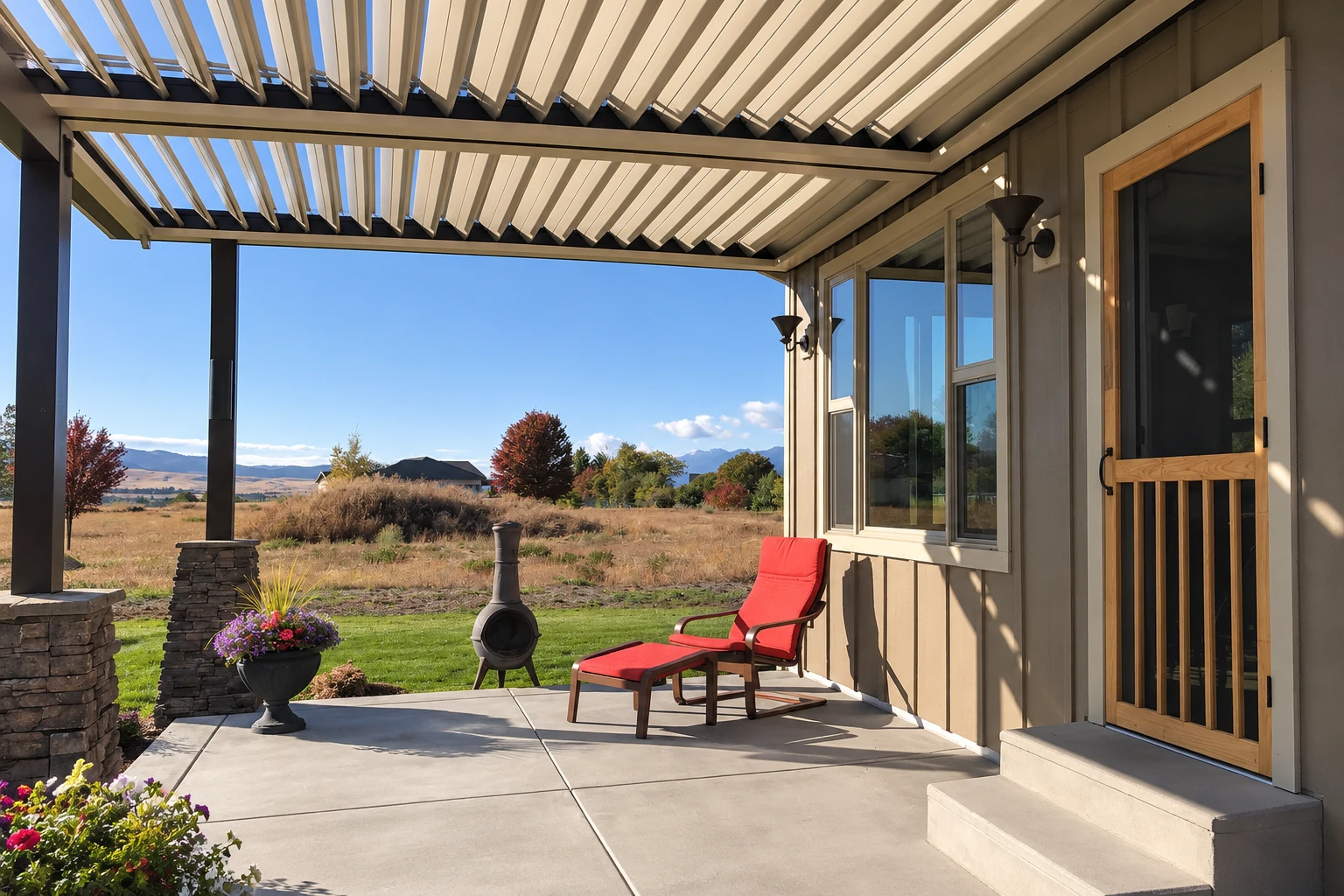
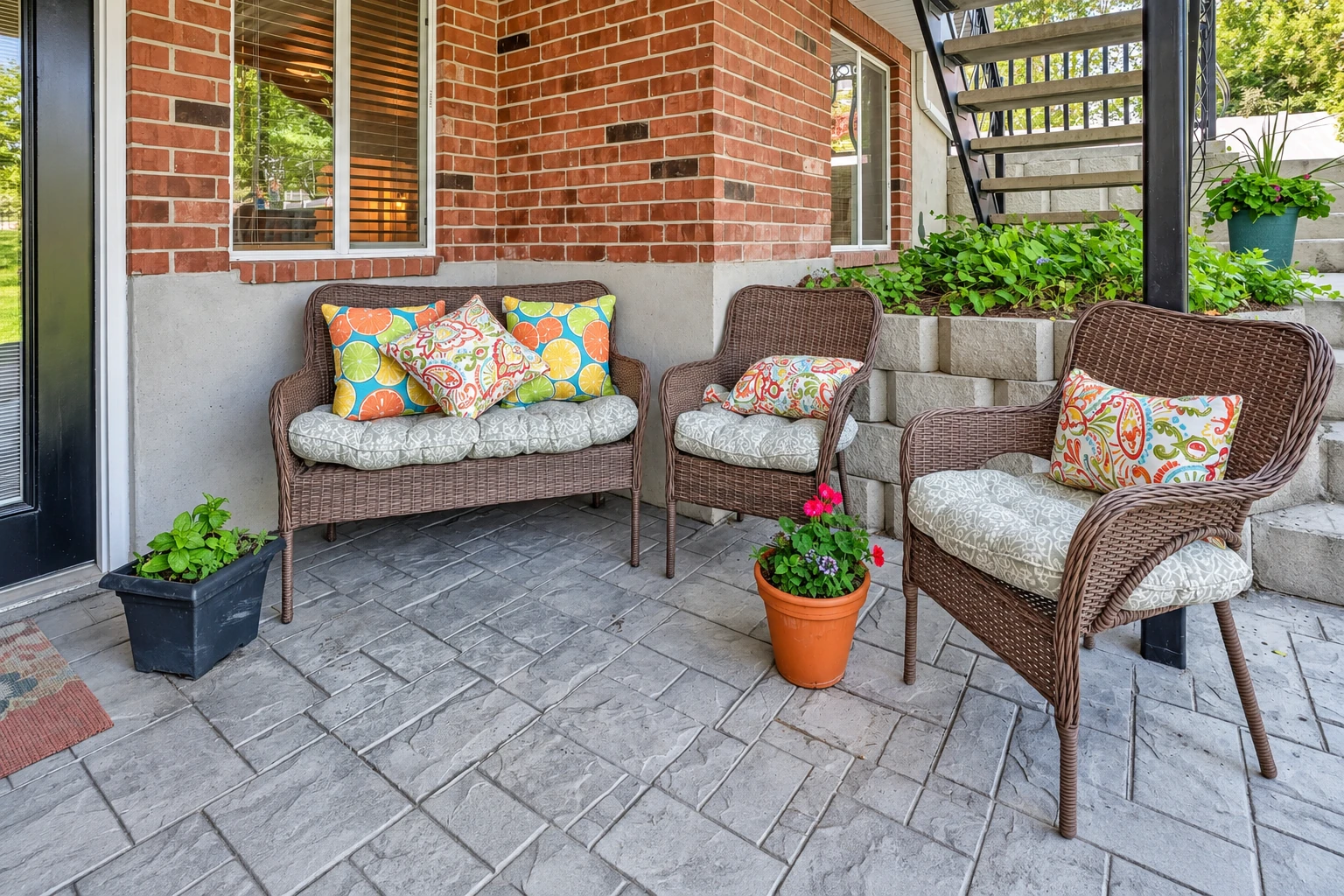
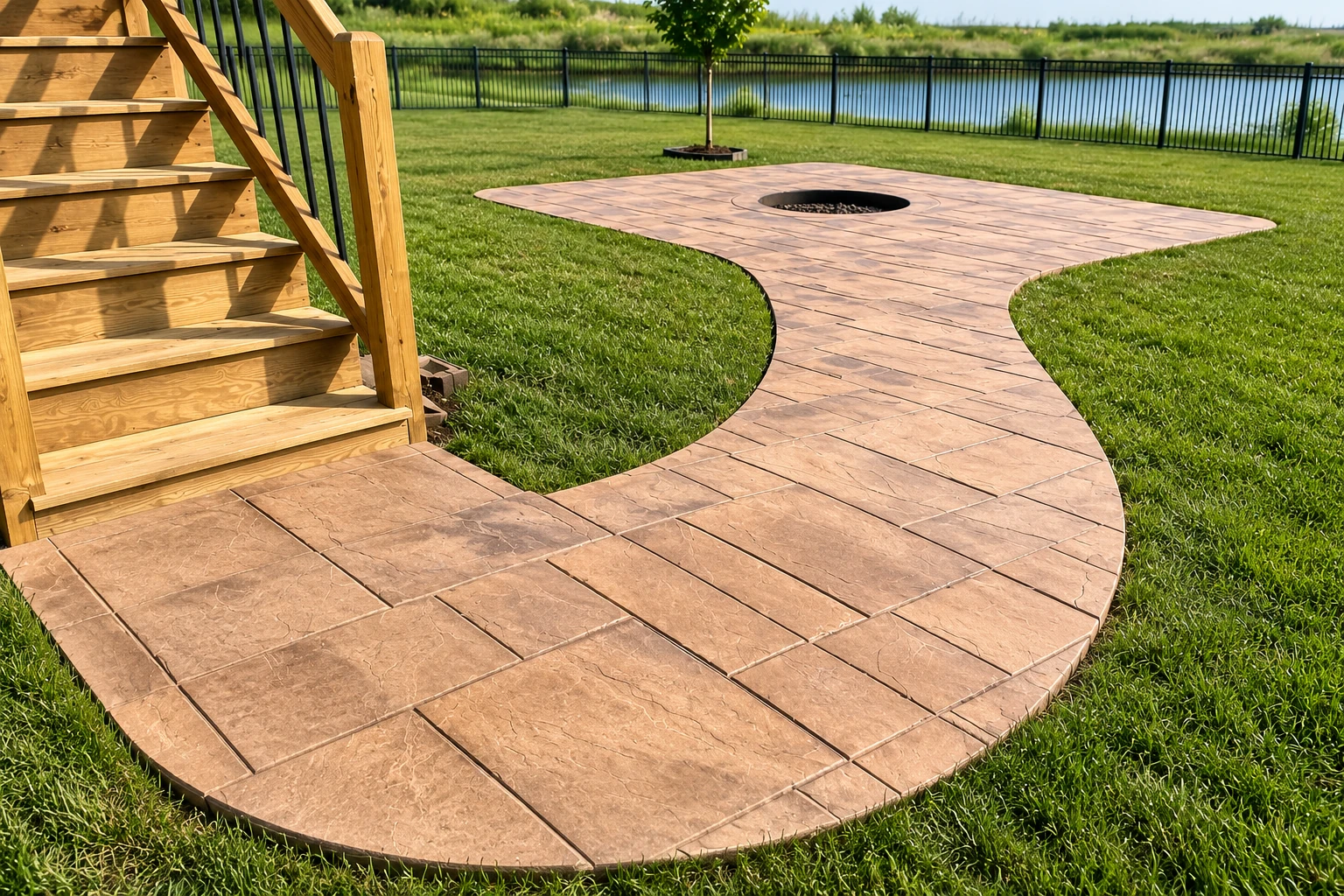
A driveway is often the first piece of a bigger plan. If you want somewhere to sit out back, we can plan concrete patio construction alongside the driveway so the two match, and if you'd like the driveway to look like stone or brick, our stamped concrete services press a pattern and color into the surface while it's still wet.
Driveway for everyday cars
This suits most houses where a couple of cars and the odd delivery van come and go. We build it for passenger vehicles and put the money where it counts, into the base and the drainage.
Heavy-duty driveway for trucks and RVs
This suits a work truck, a camper or a boat trailer that sits on the slab for weeks at a time. We build it thicker with heavier steel, which costs more up front, so the slab is built for the load it actually carries.
Get a written price for your new driveway
Send the form and we'll get back to you within one business day to set up a time for me to come out. I'll look at the site, listen to what you want and write up a free estimate, and there's no obligation to go ahead.
(510) 333-4444Concrete driveway building in Hayward and the city's rules
Hayward has a say in how big your driveway can be. The city caps your driveway and any other paving, combined, at half of the required front yard area, and a driveway in front of a two-car garage has to be 20 feet wide. So when we lay out a wider or longer driveway with you, we fit it inside that share. Any work in the public right-of-way, which includes the street and the sidewalk, needs an encroachment permit from the city, so if your new driveway ties into the curb or crosses the sidewalk, that permit is part of the job. When a permit's needed, we handle the paperwork and inspections with you and work with the city office that covers your address.
A lot of the driveways we tear out here are older slabs, often cracked straight across where no joint was ever cut, or tipped back toward the garage. We see the same thing on jobs in Castro Valley and San Leandro, and the fix is the same: dig out, rebuild the base and pour it to fall toward the street.
What happens when you call us about a driveway in Hayward?
Call or send the form
Tell us a little about the driveway, and we'll set a time to meet you there. You don't need measurements yet, just a rough idea of what you want.
Walk the driveway with me
I measure, check how the water runs and talk through what you park, then write up the estimate. It lays out the size, thickness, steel, tear-out and finish we're pricing, so you can see what you're paying for before you decide.
We prep, pour and finish
Once you're ready, we line up any permits and engineering, tear out the old slab, build the base and pour, with me running the crew the whole way. When it's done, we walk the finished driveway with you and go over how long to keep cars off it.
Frequently asked questions
How much does a new concrete driveway cost in Hayward?
A concrete driveway in the Bay Area usually costs about $8 to $16 per square foot, and that doesn't include tearing out an existing driveway. Reinforced concrete is priced higher per square foot than unreinforced concrete, and removing the old driveway is priced separately, so a heavier slab and a tear-out both add to the cost. I'll put the figure for your driveway in writing after I see it.
How thick should a concrete driveway be?
One Bay Area guide gives four to five inches as the standard, which is typically enough for regular cars. For heavier vehicles like trucks or RVs, the same guide says you may want a six to eight inch slab. So tell us about the truck or the camper before we price the job.
How long does a concrete driveway last?
Concrete driveways often last more than 30 years. How long yours goes mostly comes down to the base, the drainage and the joints, which is why those are worth paying for on something you'll live with for decades.
How long before I can drive on a new concrete driveway?
One concrete trade group's guide says to keep vehicles off new concrete for at least 7 days. During that time the slab is curing, slowly hardening and gaining strength, so plan on parking on the street or somewhere else for that first week.
What is the best way to reinforce a concrete driveway?
Wire mesh is the common choice for driveways that carry regular cars. Rebar, steel bars laid in a grid inside the slab, may be the better pick for heavy vehicles or a lot of traffic. Either kind of steel limits how wide and how bad a crack gets if one opens up, rather than stopping it outright, which is why we lean on the base and the joints too.
How much can a contractor ask for as a down payment in California?
The Contractors State License Board says a down payment on a home improvement project can be no more than $1,000 or 10 percent of the total contract price, whichever is less. After that, the board says each payment is listed in the contract and based on work already done or materials already delivered to your house.
Hayward, CA
Book a look at your driveway
Have the rough size, the vehicles you park and any old paving that has to come out handy when you call (510) 333-4444, and we can talk it through before I come out.