Concrete floor installation in Hayward CA - a level slab finished for how you'll use it
A cracked old slab, or a room that needs a hard floor? We pour and finish a concrete floor to suit how you'll use it.
- Fully licensed and insured.
- Free quotes on site.
- Replies within 1 business day.
What goes into a new concrete floor in Hayward?
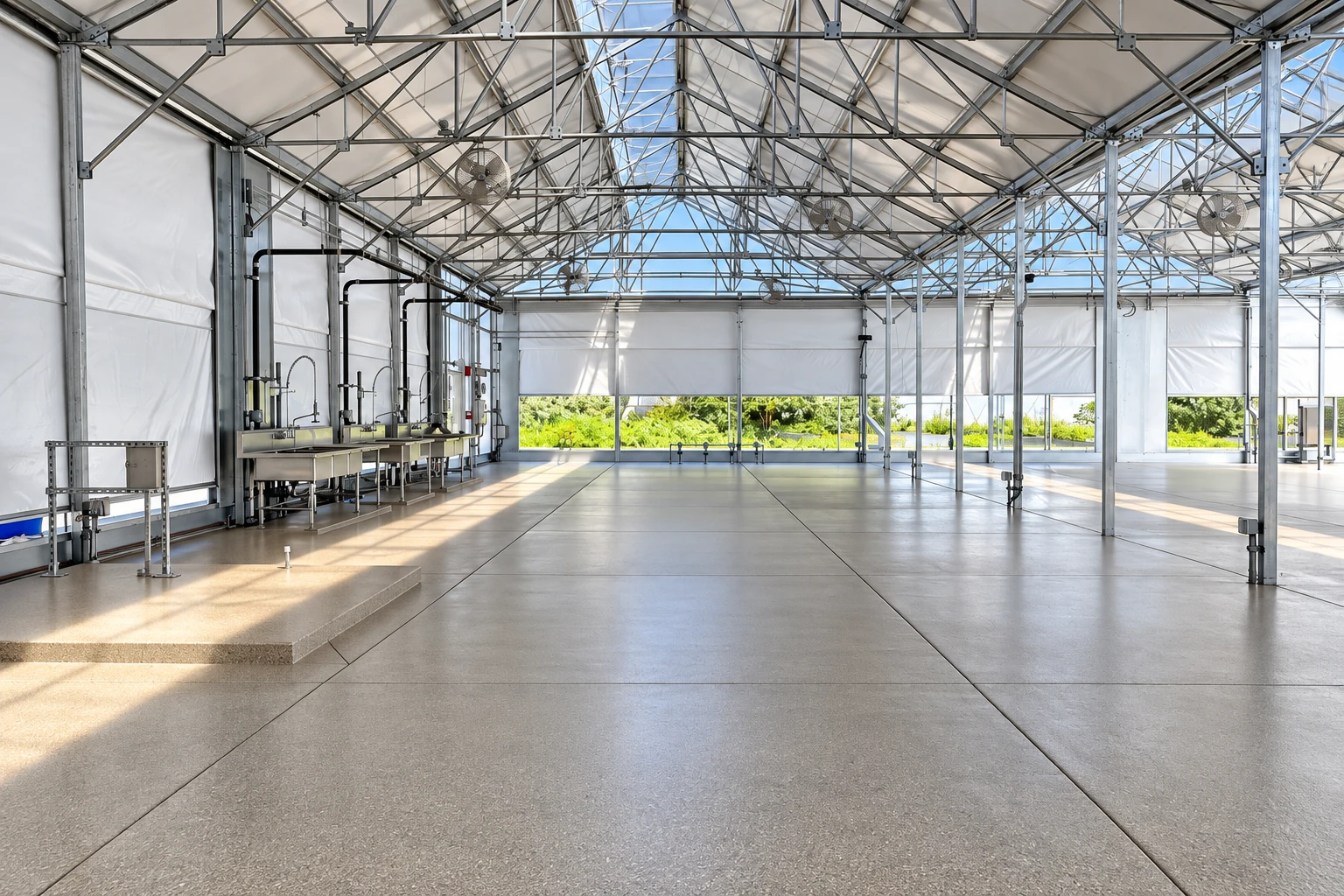
Concrete floor installation in Hayward means forming, pouring and finishing a new slab so you end up with a flat, finished concrete floor. It can be left plain, sealed or polished, depending on how you'll use the room.
Most people who call about a floor have bare ground in a new addition, a shop or storage room that needs a hard surface, or an old slab that's cracked and dusty past saving. If the floor is in a garage, that's our garage floor concrete work. The price moves with the size of the floor, how thick it has to be for what it carries, whether it needs steel, which finish you pick and whether an old slab has to come out first. The schedule turns on any permit, getting the ground ready and the curing wait before you can use the floor. Once I've seen the site, I write up an estimate that puts your own figure and plan on paper.
How do you know your concrete floor needs replacing?
Cracks running every which way
Cracks that wander across the floor usually mean the joints were cut late or skipped, so the slab cracked wherever it wanted to. Left alone, those cracks tend to widen and catch edges, and the floor gets harder to cover or coat.
A corner that's sunk
If one side has dropped, or spilled water runs toward a wall, the ground under the slab was probably raked flat when it should have been dug out and packed, and it settled. Patching the top won't stop it, because the problem is underneath.
Dust when you sweep
A top that powders or chips under a chair leg often comes from a pour done in midday heat, which leaves the surface weak. That weak layer keeps wearing away, and it can take any coating you put on it along with it.
How we do concrete floor installation
The first thing I settle with you is the finish, plain, sealed or polished, because it changes how we set up the vapor barrier and the joints. The vapor barrier is the plastic sheet that keeps ground moisture from coming up through the floor. Then our crew digs out and packs the subgrade, the ground the slab sits on, because a floor poured on raked dirt settles along with it. If I have to choose between a fancier finish and a better base, I'll put the money into the base, since nobody sees it on day one and you can't fix it later without tearing the floor out. We set rebar where the floor needs it, which is steel bar that adds strength and holds the slab together if it cracks. We pour early in the day so the top doesn't dry out weak in the heat. After we finish the surface, we cut control joints, which are shallow grooves that give the slab a straight place to crack. I'll tell you up front that a little cracking is normal, and before the pour I'll show you where those joints will guide it. Then the floor cures, which is the slow hardening that builds its strength, and we keep traffic off it until it's ready.
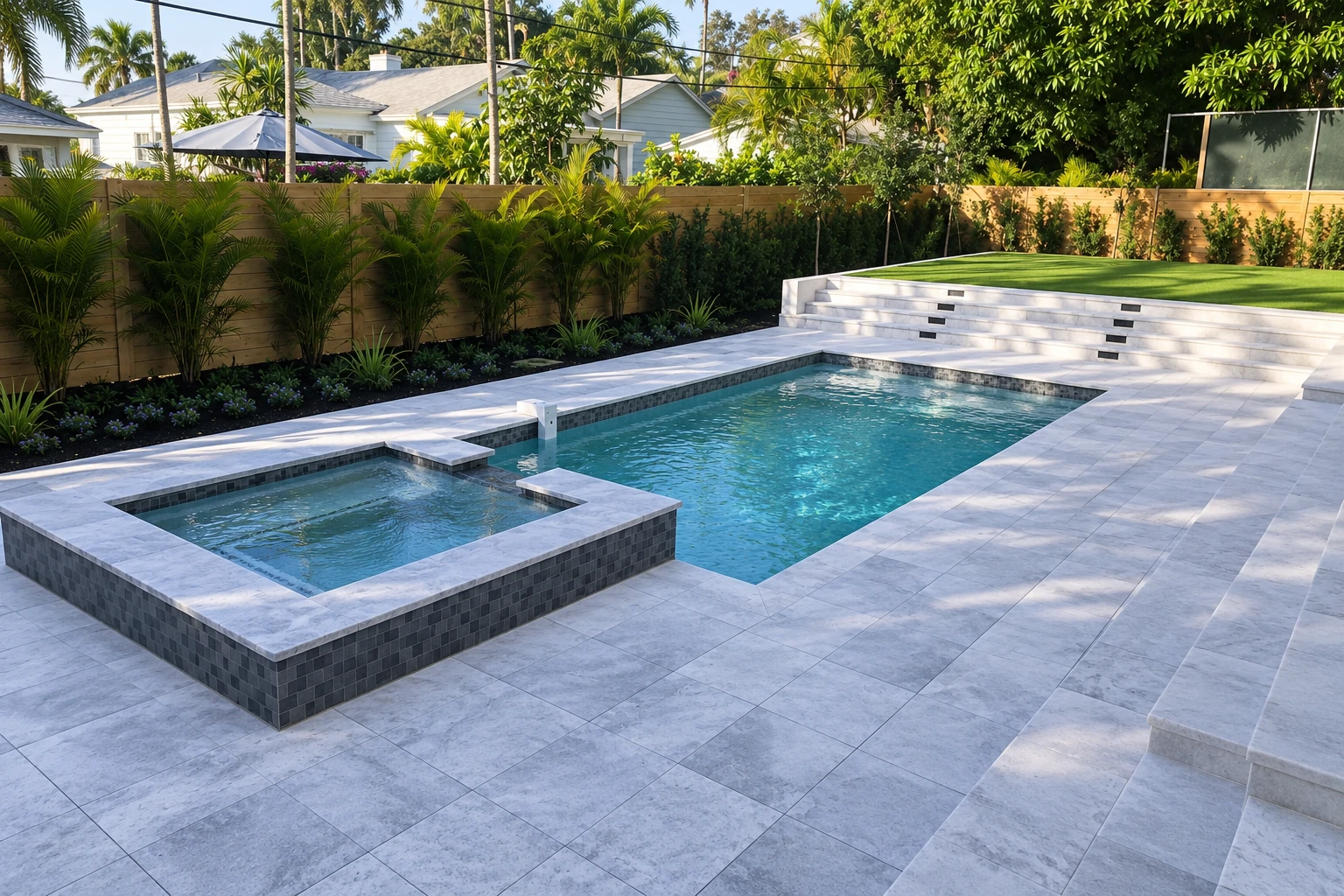
A new floor is often part of a bigger project. If it opens onto the yard, we can pour concrete steps down from the door at the same time so the heights line up. If you have a pool, concrete pool decks get the same base work and joint planning, with a textured top that's better for wet feet.
Plain concrete floor
This suits storage rooms, workshops and floors you'll cover later, where the cost matters more than the looks. Plain concrete is porous and stains easily, so I don't suggest it for a busy room you plan to leave bare.
Sealed concrete floor
A coating on top protects the concrete, which makes sense in kitchens, laundry rooms and other high-traffic spaces that see spills. It's the usual middle ground when you want a bare floor that wipes up easily.
Polished concrete floor
Polishing leaves the surface smooth and glossy, which suits living spaces and shops where the floor is part of the look. It has to be planned before the pour, so it's the finish I most want to settle early.
Get an estimate for your new concrete floor
Send the form and we'll get back to you within one business day to set up a visit. I come out myself, look at the site and write up a free estimate with no obligation, so you can decide in your own time.
(510) 333-4444What changes a concrete floor installation in Hayward
Hayward requires a building permit for almost all construction work, including structural work and demolition, so a new floor usually needs one, and so does breaking out an old one. If you want to check on your project, the city's Permit Center answers questions at 510-583-4140. When your job needs a permit, we handle the paperwork and inspections with you and work with the city or county office that covers your address. We're based in Hayward and work in the cities around it, across the East Bay and over on the Peninsula.
A soil report for one site, posted on the city's website, found plastic clay that can swell and shrink as the ground gets wet and dries out through the seasons. Most of the soil near the surface in that report's test holes rated high to critical for plasticity. That covers one site and not the whole city, so I look at the ground on every floor before I price it, the same as on jobs in Castro Valley and San Leandro.
What happens after you call about a concrete floor?
Call or send the form
Call (510) 333-4444 or send the form, and we'll get back to you to set up a visit. Tell us roughly where the floor goes so we can plan a time that works.
I look at the site
I check the room and the ground, ask how you'll use the floor and talk through the finish with you. You get a written estimate that lays out the slab, the finish and what's driving the price, so you know what you're paying for.
We prep, pour and finish
Once you're ready, we line up any permits and engineering, prep the ground, then pour and finish within the city's construction hours, which run 7 a.m. to 7 p.m. Monday to Saturday and 10 a.m. to 6 p.m. on Sundays and holidays. When it's done, we walk the finished floor with you.
Frequently asked questions
How much does a concrete floor cost in the Bay Area?
Concrete slab installation in the Bay Area usually costs about $9 to $18 per square foot. That covers the slab itself. Reinforced slabs cost more per square foot than unreinforced pads, and staining or stamping isn't included, so a decorative finish adds to the price. Your estimate gives you the figure for your own floor.
How long does a new concrete floor take before I can walk on it?
A new concrete floor should be walkable within 48 hours, though it takes about a month to fully cure. To be safe, plan to wait a week before heavier loads like furniture or equipment go on it.
Will my new concrete floor crack?
Some cracking can't be prevented entirely, but properly designed joints control it and keep it to a minimum. It's fair to ask any contractor how they'll plan the joints before the pour, because the joints decide where the cracks end up.
Do I need a building permit for a concrete floor in Hayward?
Most likely, yes. The city's permit rule covers almost all construction work, including tearing out an old slab. The Permit Center at 510-583-4140 can confirm it for your project, and I'll talk it through with you at the estimate.
Does a garage or workshop floor need a thicker concrete slab?
Usually, yes, when the floor will carry more weight. Garage, foundation and basement slabs sit at the thicker end of the usual Bay Area range for home floors. I'll ask what's going on the floor, whether that's a car, a workbench or heavy shelving, so the thickness and the steel suit the load.
What is the best way to protect flooring laid over a new concrete slab?
Industry floor guidance says floor coverings and coatings get the most protection when the vapor barrier sits right against the slab. If you plan to lay flooring or a coating, tell me at the estimate and ask where the barrier will go, because we set it up around your finish.
Hayward, CA
Start planning your new concrete floor
Have the rough square footage, what the floor is for and the finish you want ready when you call (510) 333-4444 or send the form, so the visit starts from your plans.